
2027 Legislative Agenda
Affordability
Income Taxes
Recent legislation passed by the Republican majority and signed into law has reduced the income tax rate over the past few legislative sessions. I am not opposed to a reduction in taxes, but they must benefit the most vulnerable in our society first and the income tax cuts so far have not. Any income tax reductions also need to understand the risks, and impacts, to public services also. In my view, the current legislation has fallen well short with regard to these areas.
Here are some numbers
If you are a family, filing as married filing jointly, and $42,000 taxable income per year (that is $3,500 per month). You will pay 4.7% tax or $1,974 per year in Montana State Income Tax (based on 2025 tax tables). If you are single and making $21,000 taxable income per year, you also pay 4.7% or $987 per year. That is insane!
I will introduce legislation in 2027 that will make the income tax rate zero:
Single filer making less than $30,000 taxable income. Montana State Income Tax = ZERO
Married filed jointly making less than $60,000 taxable income. Montana State Income Tax = ZERO
Head of Household making less than $45,000 taxable income. Montana State Income Tax = ZERO
To pay for these income tax cuts, I will introduce a new tax rate on high end earners. Single at greater than $125,000 and married filing jointly greater than $250,000.
Property Rentals
Large companies own too many rentals properties. When homes are coming for sale, often property management or real estate companies purchase them and turn them into rentals. Individual home buyers can’t compete on price or are not aware the property is on the market, before it is scooped up by a company. Once a property is in the portfolio of a property management or real estate company, they have control over how rent is set. The family that used to own a few rentals is becoming a thing of the past.
I will introduce legislation in 2027 that will cap the number of rental properties that an individual company, or a company with its subsidiaries, can own.
Residential Renewable Energy
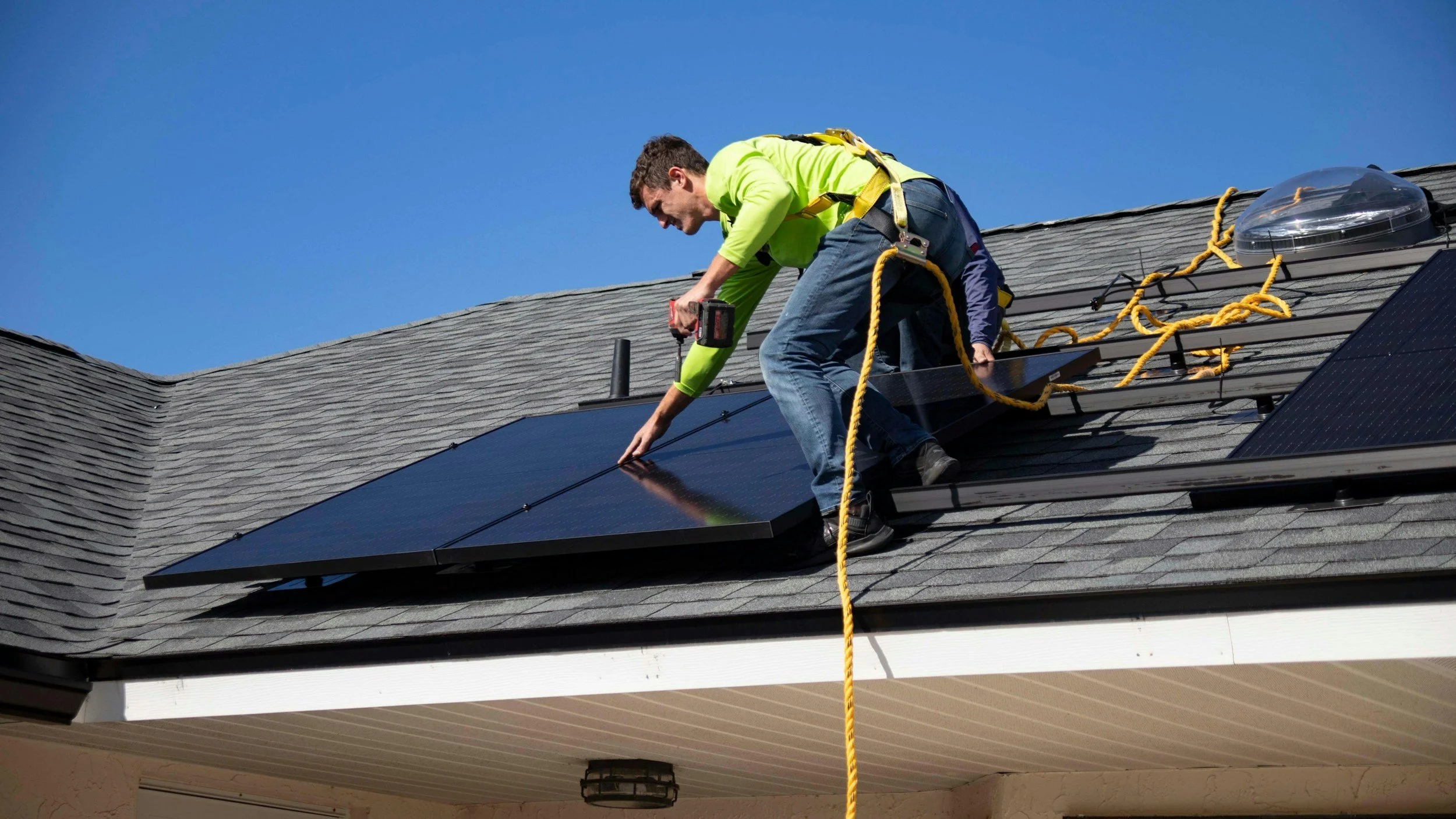
Residential Renewable Energy (RRE) is maximizing solar, and wind technology applied at the residential level. This includes home mounted solar systems, home windmills or turbines and efficient battery storage systems. I prefer helical design residential wind turbines, but bladed systems are also efficient. Two things we have in Cascade County are a lot of sun and a lot of wind. These systems have been around for decades and have failed to take hold at significant levels due to a number of issues. I believe the biggest issues are entry costs and installers from trusted local companies. The majority of people don’t like buying a product or having significant work done on their home when the sales and installers are out of state, and if you have a problem, you don’t know if they will be around to help resolve the problem. Another hesitancy that people have is knowing that the technology will be able to survive our extreme Montana weather conditions, including hail. To provide a little context, an average home would need about 10 solar panels to meet its electricity demands. In addition, one residential helical wind turbine provides about 10% of a home’s electricity demands. My goal is to see 25% of Cascade County’s residential electricity demand be supplied by RRE by 2035. My ultimate goal is to not only have significant installations of RRE in Cascade County, I want to see the solar panels, wind turbines and battery systems manufactured in Cascade County.
In 2027, I will introduce legislation with three main aspects:
Set up a State office of Residential Renewable Energy. This office will be responsible for:
Ensuring technology is appropriate for applications in Montana
Establishing criteria for a best-in-class training program to be delivered by local contractors and trade unions to develop the skills for installation of the RRE systems
Establishing a certification system for local contractors and installers so homeowners have confidence the installation will be done right and is supported through the life cycle of the installation
Processing State grants to defer homeowner costs and to provide training for installers
Identifying and securing Federal money that may help defray homeowner or local contractor costs, and help both groups secure that funding
Champion the RRE program
Set up State funding for the Office of Residential Renewable Energy and set aside State money to defer homeowner costs and for local contractor training programs
Establish an RRE training, development and certification program by working with local trade unions and contractors to build this program
RRE is a win win for all parties, unlike a lot of Climate change legislation that has winners and losers. It would be amazing to see Montana be the leader in RRE in the County.

Resident Hunting Rights
Montana resident hunting rights have been slowly eroded over the past years in favor of out of state, high profit margin hunters and fishermen. I will introduce legislation in 2027 to begin to the restoration of the hunting rights that Montana residents deserve. This legislation will include:
Open rifle season one week earlier and keep it open one week later for Montana residents than for out of State hunters.
Require all out of State hunters to go through qualified Montana outfitters.
Greatly increase license fees for out of State hunters.
Guarantee all Elk and Deer tags go to Montana Resident hunters first, with only any remaining being available to out of State hunters.
Increase penalties for herd manipulation by private landowners.
Make Montana FWP head an elected, not appointed, position.

Criminal Justice Reform
I intend to start small with criminal justice reform in the 2027 legislative session. I think everyone can agree that our criminal justice system is in need of reforms. I am also sure there are significant disagreements on what reforms are needed. I believe that our criminal justice system is too punitive and not positive. Recidivism rates have remained unchanged for decades, hovering in the 70% range. Incarceration is often the first option, rather than the last. Wealthy people have a significant advantage over poorer people throughout the entire process. Private prisons, which make more money when prison population is higher, should not be a part of our prison system. Any financial incentives to increase incarceration levels should be reviewed, and on balance, be removed.
I have a laundry list of reforms I think are needed, but in 2027, I will introduce legislation to address the following.
Stiffen the application of the Miranda laws. If law enforcement believes there is a possibility that an individual may be arrested for a crime at a later date, they must Mirandize the individual before interviewing them. If a person is arrested, any information gained from interviews prior to being Mirandized will not be allowed.
Any outstanding balance from a prisoner’s Inmate Finance and Trust Account will be promptly returned to the prisoner the day of release. No processing or other fees will be deducted from the account. Payment will be made so funds are available directly to the inmate. If payment is in the form of cashier’s check or personal check, the State will have agreements with Banks and Credit Unions to cash the checks with no cost to the inmate.
Paid for by Mark Winters, PO Box 19, Black Eagle, MT, 59414